Project Planning
Room for the RV, Trailer or Extra Cars
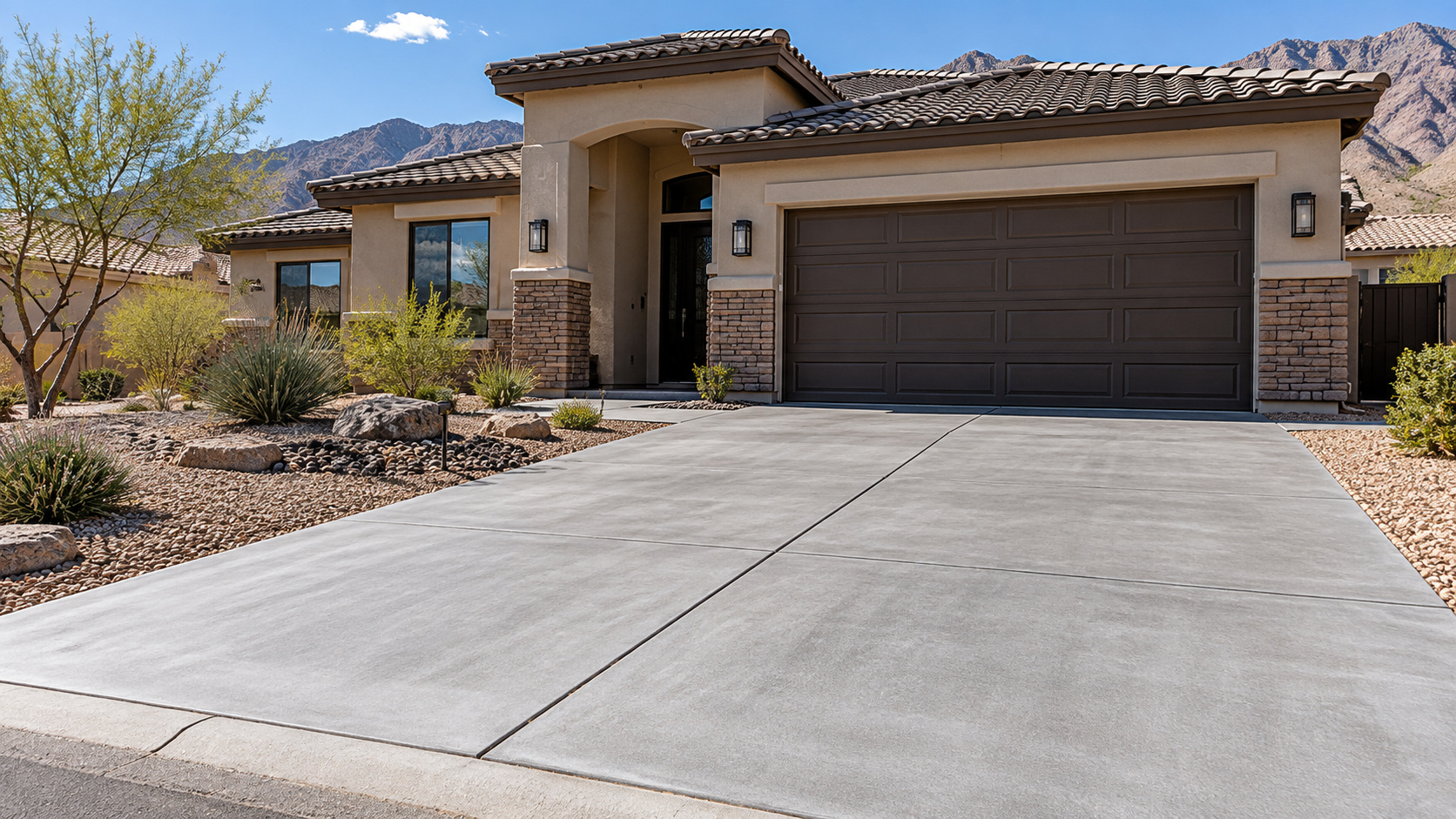
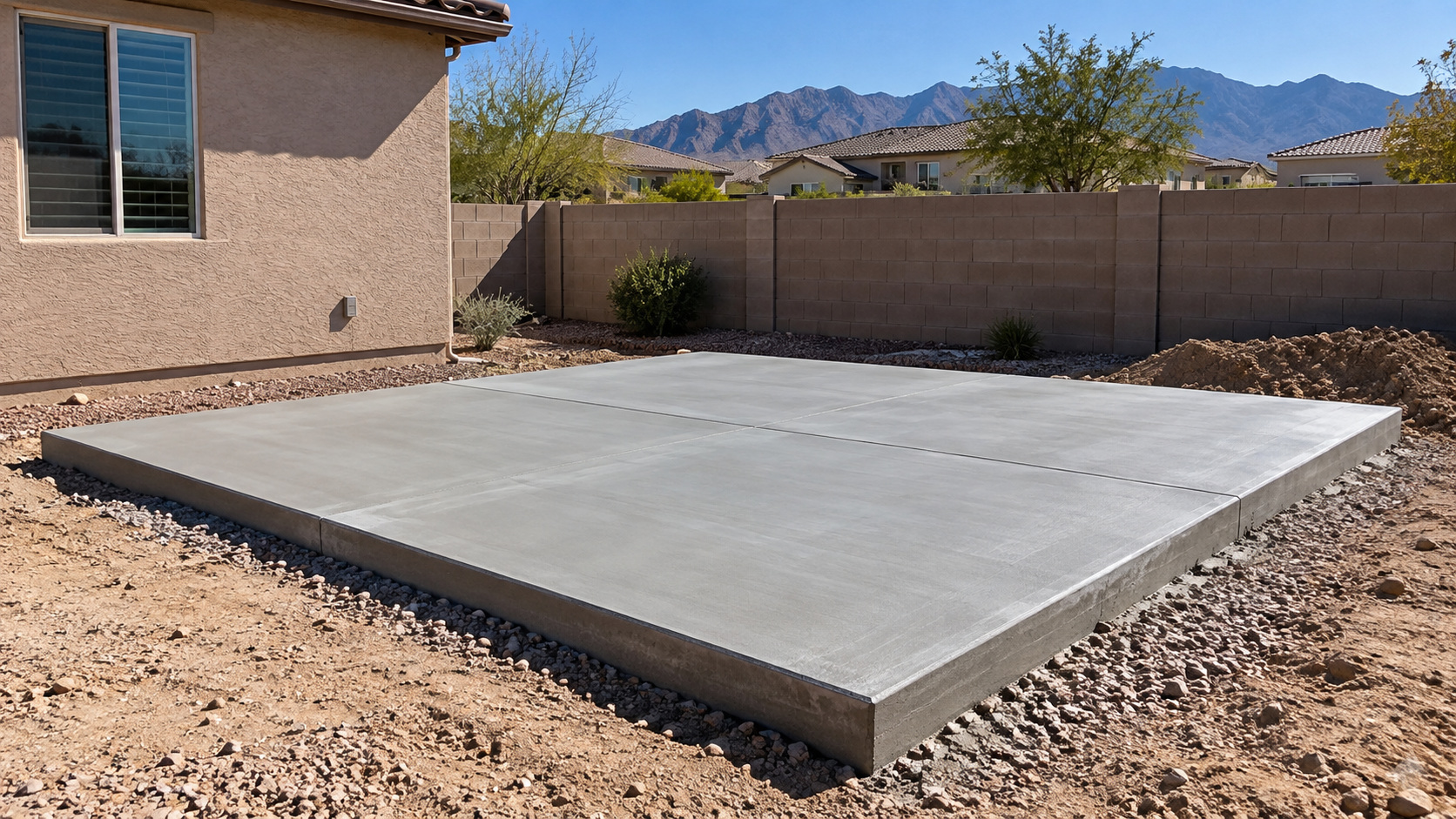
When we build an RV or parking pad, we start with the vehicle, not a convenient rectangle of concrete. Many Las Vegas Valley lots have a side yard or extra space that can become solid vehicle storage, and the pad only works if it fits what you park there.
Vehicle weight, wheel paths, turning room, gate width, slope, drainage and the connection to your driveway all shape the layout. Long RVs and trailers also need a usable approach, so we make sure you can actually back in once the pad is poured.
We start with what the concrete will carry and how you use it every day.
We set excavation, compaction, elevations and drainage before anything is poured.
We pick a finish and a placement plan that fit your property and how we can reach the work.
Built for the Weight You Park on It
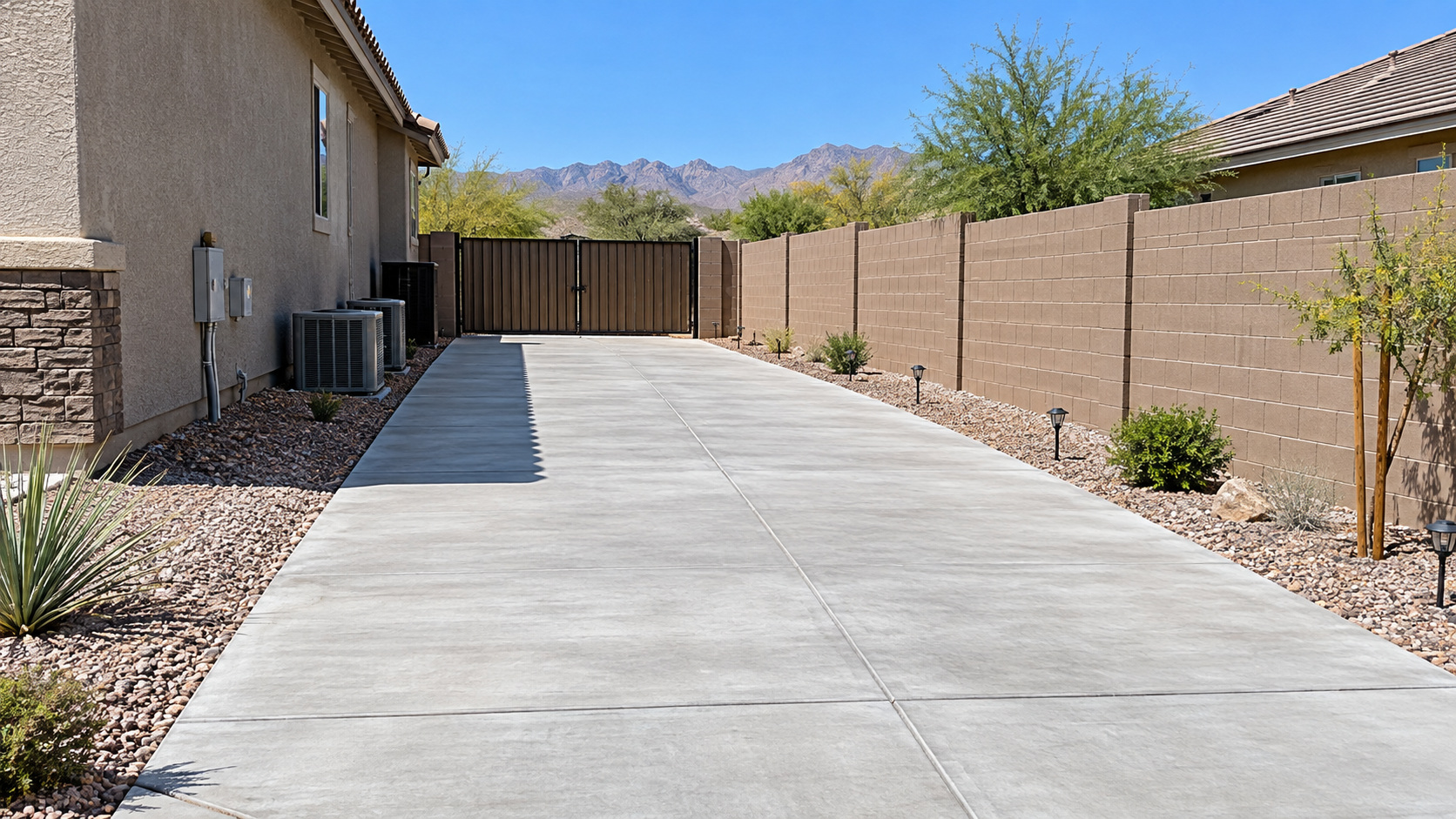
Heavy vehicles call for different thickness, reinforcement, edges and base than a walkway. We prepare the subgrade for the load and slope the surface so water doesn't sit around the tires, the walls or the house.
Side-yard access is one of the biggest variables on these jobs. Block walls, gates, AC units, utility equipment, landscape rock, irrigation and the neighbor's structures can limit equipment and change how we get concrete in.
What You Don't See Matters Most
The finish is the part you see. We put the same planning into what sits under it: the base, thickness, reinforcement, drainage, joints and the transitions to existing concrete.
Local Conditions
What Desert Heat and Your Lot Change
North Las Vegas has newer subdivisions and older neighborhoods with all kinds of lot layouts. In both, a dedicated pad solves parking and storage without gravel or makeshift surfaces.
Desert heat and sun matter when we place and cure the pad, and the color and finish affect how a large side-yard slab looks next to stucco and desert landscaping.
Planning & Cost
What Your Price Depends On
An RV pad is a heavier slab. Our typical range for an RV or parking pad is $8 to $14 per square foot, above our $6 to $10 basic slab range because it needs a thicker section and more reinforcement for the weight. Square footage, excavation, base work, access, forms, transitions, demolition and finish also move it. Your final price comes from a written quote after we see the job.
A narrow side-yard pad with hard access can cost more to build than an open pad with the same amount of concrete. If the job means widening the driveway approach or working near the public right-of-way, we identify the extra planning or permits before we price it as a backyard slab.
| Cost Driver | What Changes |
|---|---|
| Project size | Concrete volume, forming, finishing and getting set up on site. |
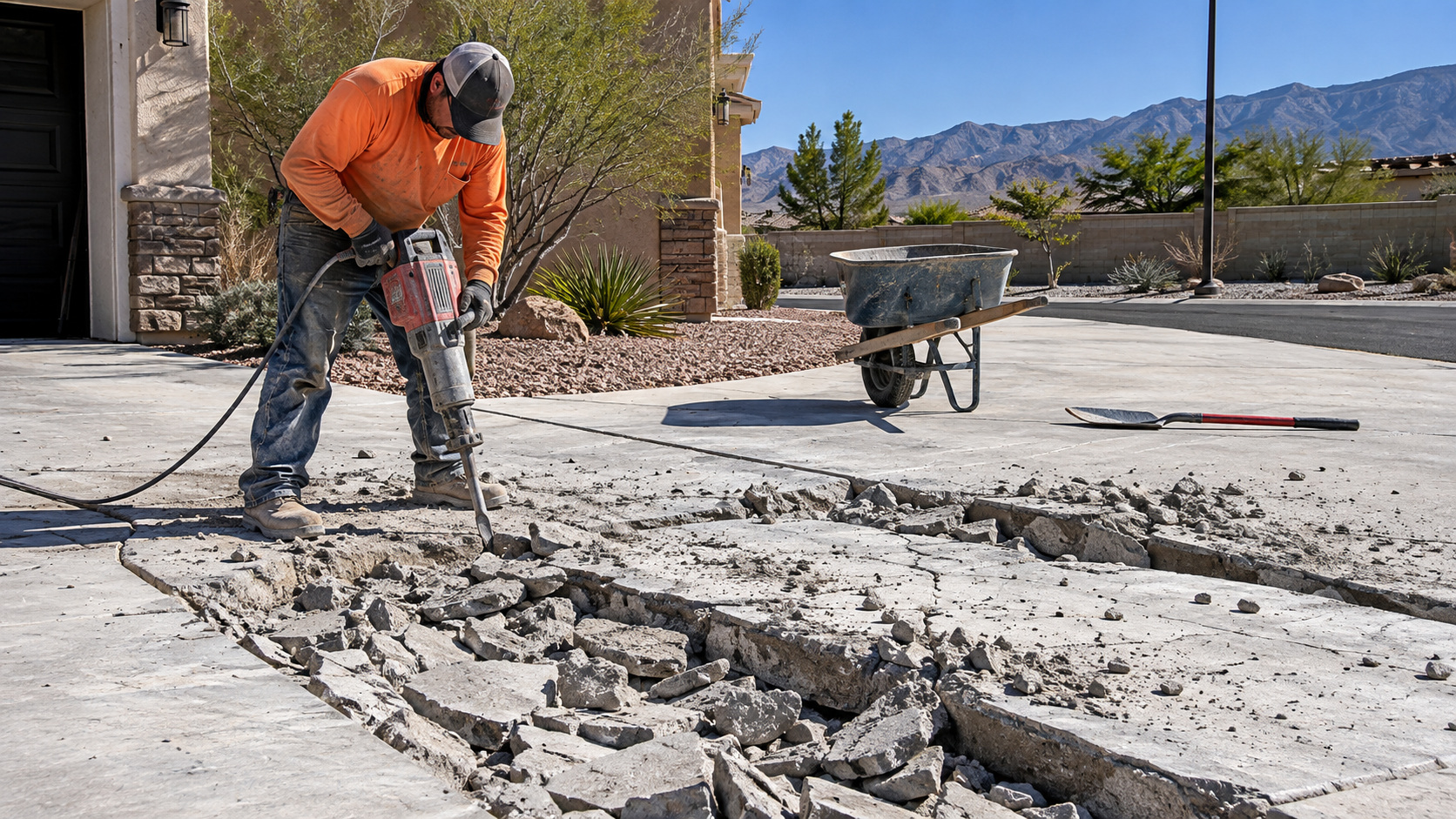
| Demolition | Cutting, breaking, loading and hauling old concrete, and protecting what stays. |
| Base and grading | Excavation, compaction, new base material and correcting elevations. |
| Thickness and reinforcement | Set by what the concrete has to carry. |
| Finish | Broom, color, stamp, borders, texture and sealer where you want them. |
| Access | Gate width, how far we carry concrete, and equipment limits. |
Estimate Preparation
What to Send Us for an Estimate
The more you tell us about the property and how you will use the concrete, the more useful our first conversation is. Send rough dimensions, a few photos, the address or ZIP code, whether old concrete has to come out, how you will use it, the finish you want, any access limits and your timing. For structural or commercial work, send plans or specifications if you have them.
That tells us early whether your job is simple flatwork or needs demolition, extra base work, special reinforcement, permits or a harder placement.