Project Planning
Keeping Your Business Open While We Work
On commercial jobs we start with how the site has to keep working, not just the square footage. Commercial concrete is often defined as much by logistics as by size. The work may have to happen around tenants, deliveries, customers, loading areas, equipment, parking or other trades, so we map the work zone and how your property will run while we remove, form, pour and cure.
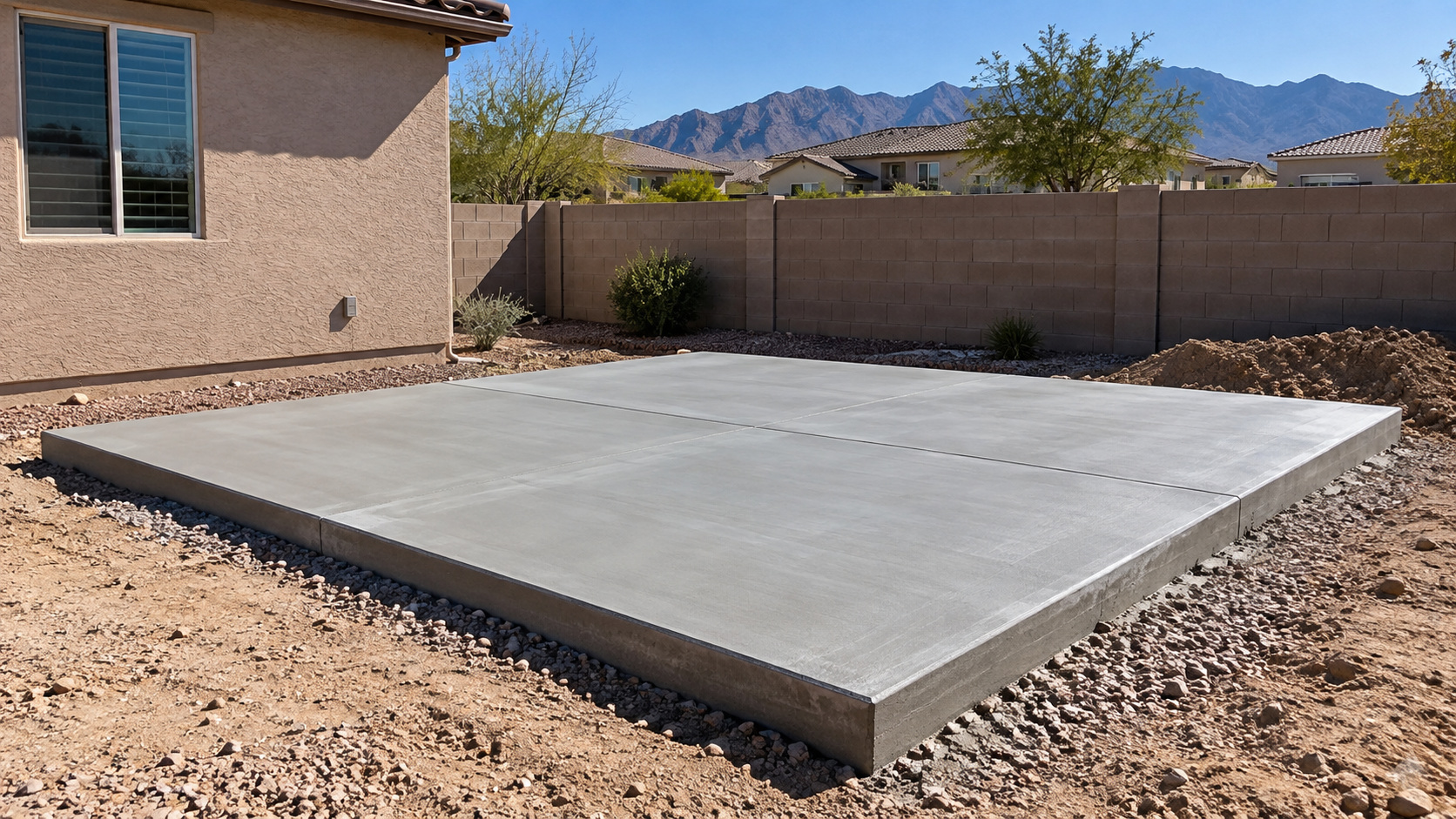
Jobs can include sidewalks, entries, curbs and transitions, slabs, equipment pads, dumpster and service areas, repair sections, light-industrial flatwork and other improvements. We define each area by its use instead of treating it all as one generic slab.
We start with what the concrete will carry and how you use it every day.
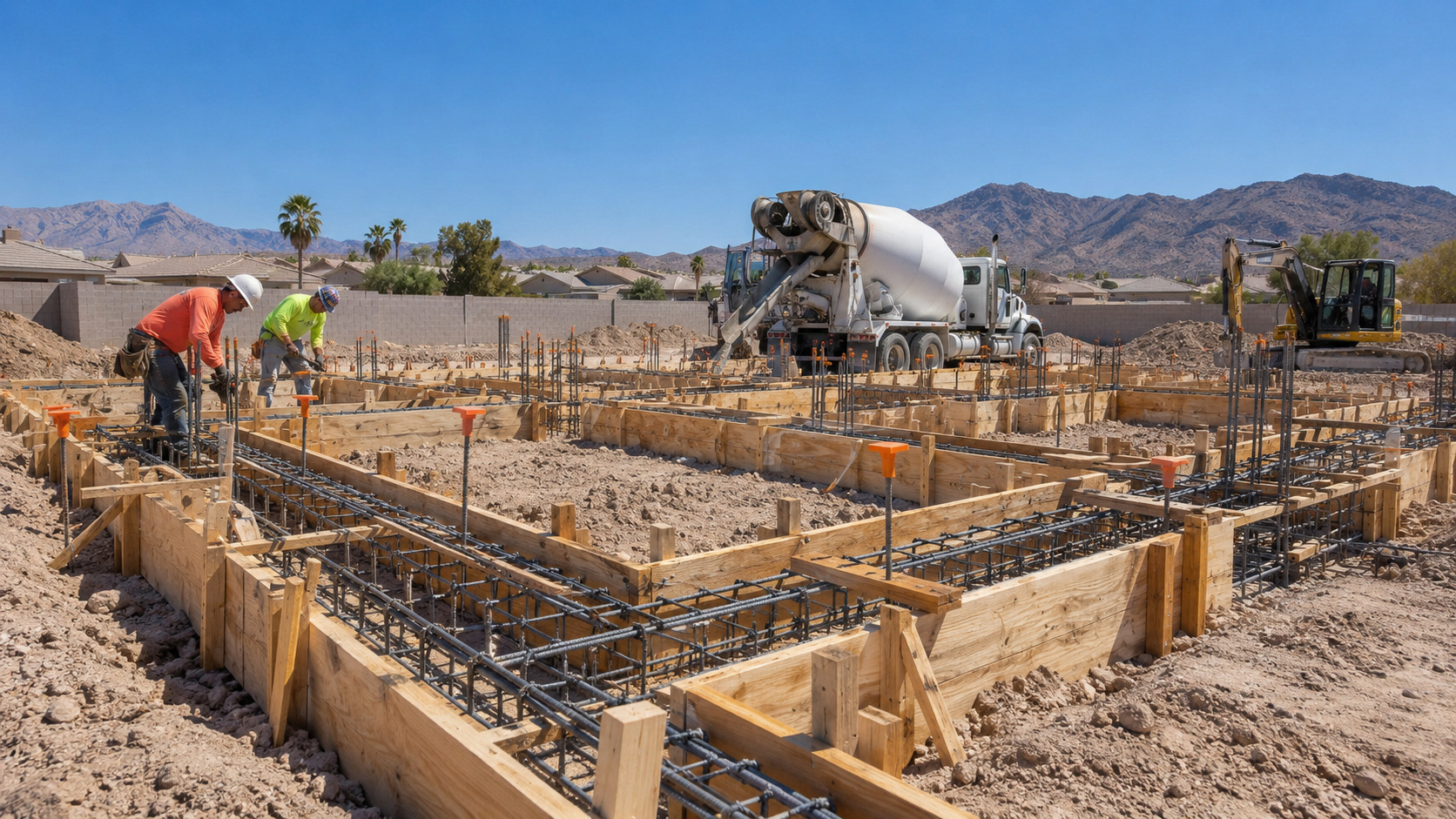
We set excavation, compaction, elevations and drainage before anything is poured.
We pick a finish and a placement plan that fit your property and how we can reach the work.
Phasing, Traffic and Heavier Loads
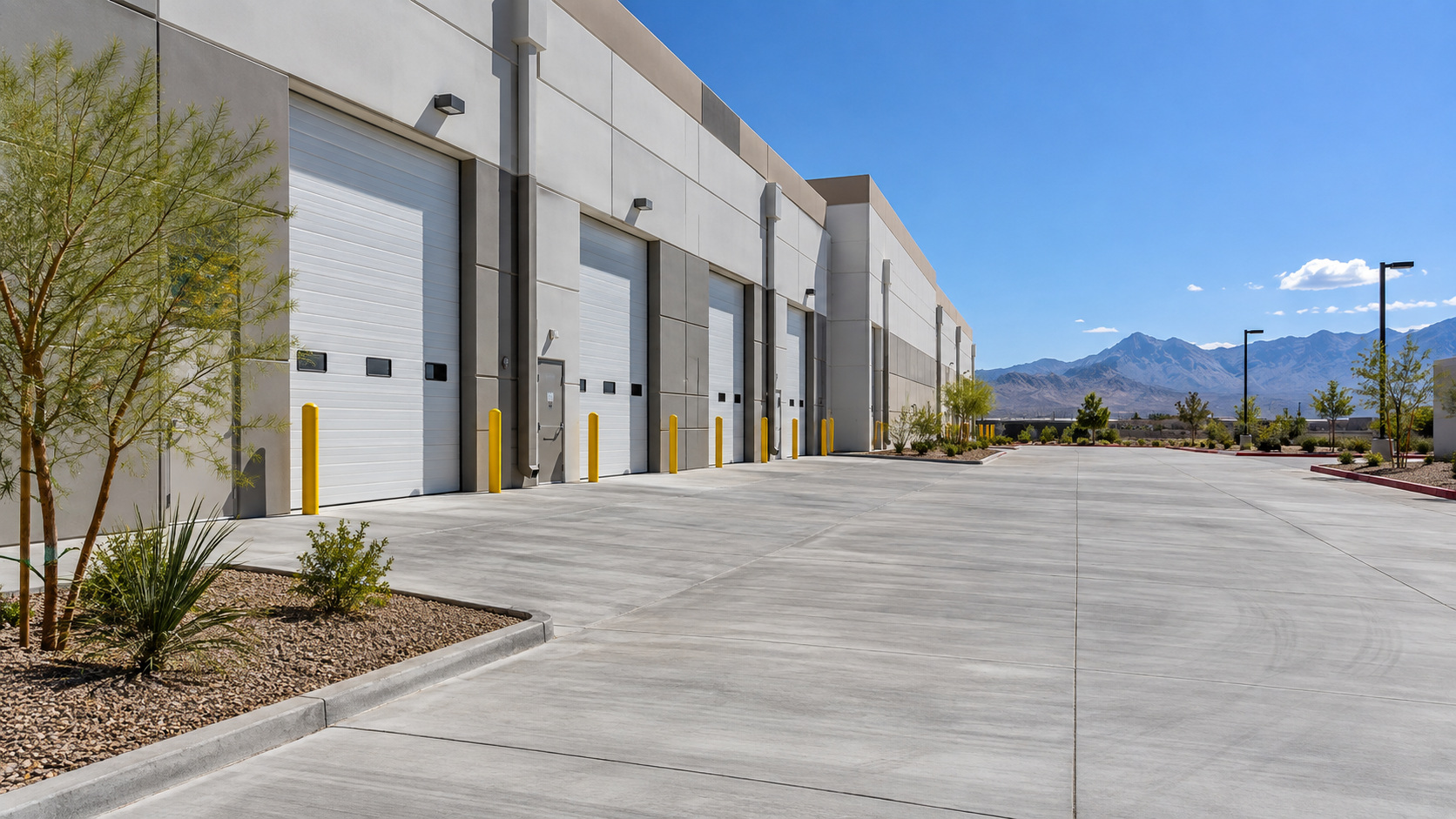
Phasing keeps part of an entrance, parking area or service route open while we work elsewhere. We talk through barricades, foot traffic, delivery access and cure time with you before demolition starts.
Commercial loads differ from residential ones. Forklifts, delivery trucks, dumpsters, equipment and constant traffic change the thickness, reinforcement, joints and base, and on engineered projects the plans and specifications govern.
What You Don't See Matters Most
The finish is the part you see. We put the same planning into what sits under it: the base, thickness, reinforcement, drainage, joints and the transitions to existing concrete.
Local Conditions
What Desert Heat and Your Lot Change
North Las Vegas keeps adding commercial and industrial space, including the Apex area and other job corridors, which makes durable exterior flatwork, slabs, access surfaces and repairs part of everyday property upkeep.
The city specifically requires a civil improvement plan for commercial driveways in North Las Vegas. Other work may have its own permit, accessibility or inspection requirements depending on where the concrete sits and what it serves.
Planning & Cost
What Your Price Depends On
We price commercial work from the scope and the drawings, not by the square foot. Your quote covers demolition, haul-away, phasing, setup, access, base work, reinforcement, the concrete specification, forms, finish, traffic control, cure protection and anything the plans require, because a square-foot price alone hides the work around the slab. Your final price comes from a written quote after we see the site.
Larger quantities can improve efficiency, but complicated phasing, tight work windows, protecting an open business or heavy-duty sections can offset that. Quotes only compare fairly when everyone priced the same drawings and assumptions.
| Cost Driver | What Changes |
|---|---|
| Project size | Concrete volume, forming, finishing and getting set up on site. |
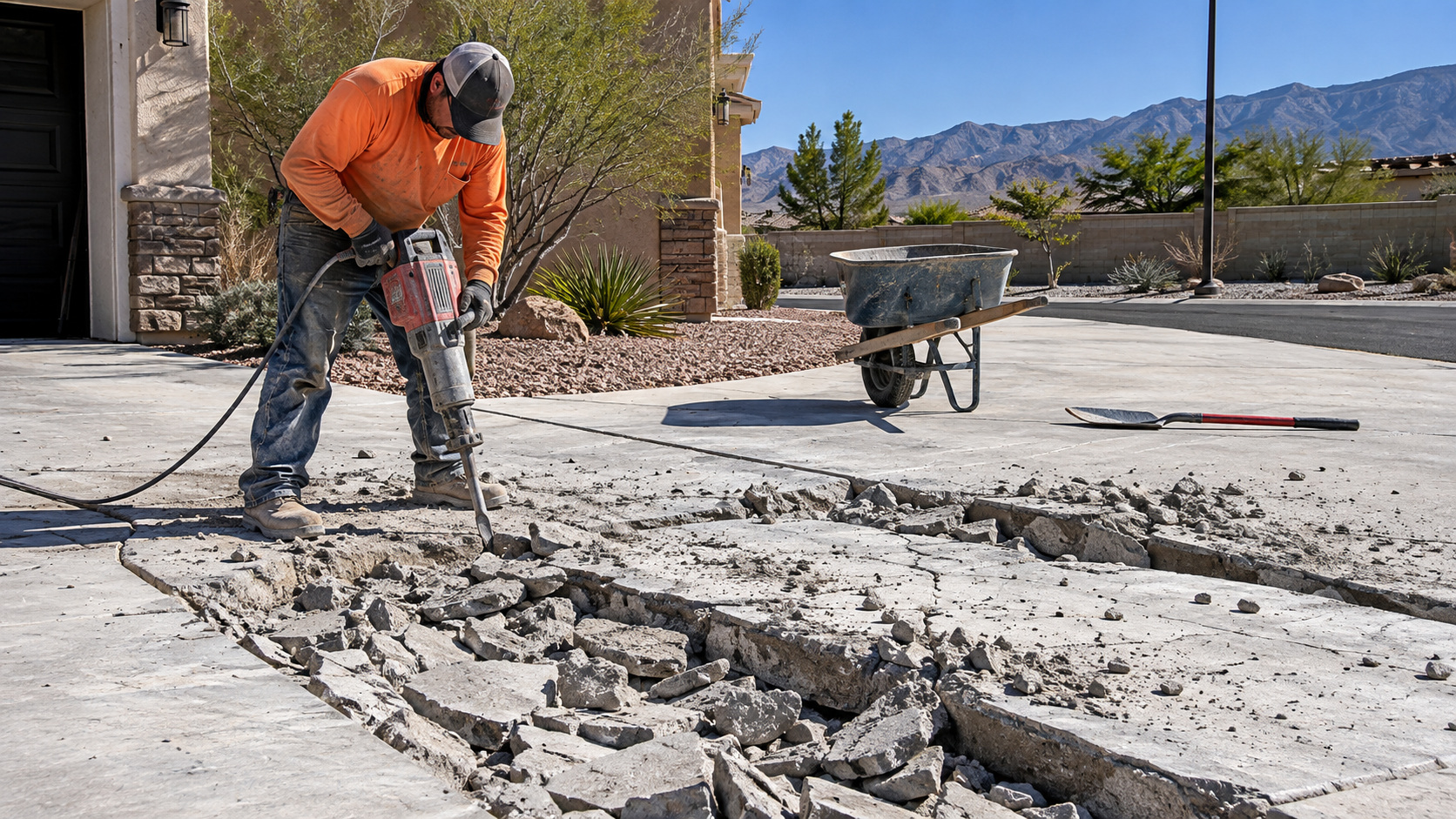
| Demolition | Cutting, breaking, loading and hauling old concrete, and protecting what stays. |
| Base and grading | Excavation, compaction, new base material and correcting elevations. |
| Thickness and reinforcement | Set by what the concrete has to carry. |
| Finish | Broom, color, stamp, borders, texture and sealer where you want them. |
| Access | Gate width, how far we carry concrete, and equipment limits. |
Estimate Preparation
What to Send Us for an Estimate
The more you tell us about the property and how you will use the concrete, the more useful our first conversation is. Send rough dimensions, a few photos, the address or ZIP code, whether old concrete has to come out, how you will use it, the finish you want, any access limits and your timing. For structural or commercial work, send plans or specifications if you have them.
That tells us early whether your job is simple flatwork or needs demolition, extra base work, special reinforcement, permits or a harder placement.