Project Planning
What Will Sit on Your New Pad?
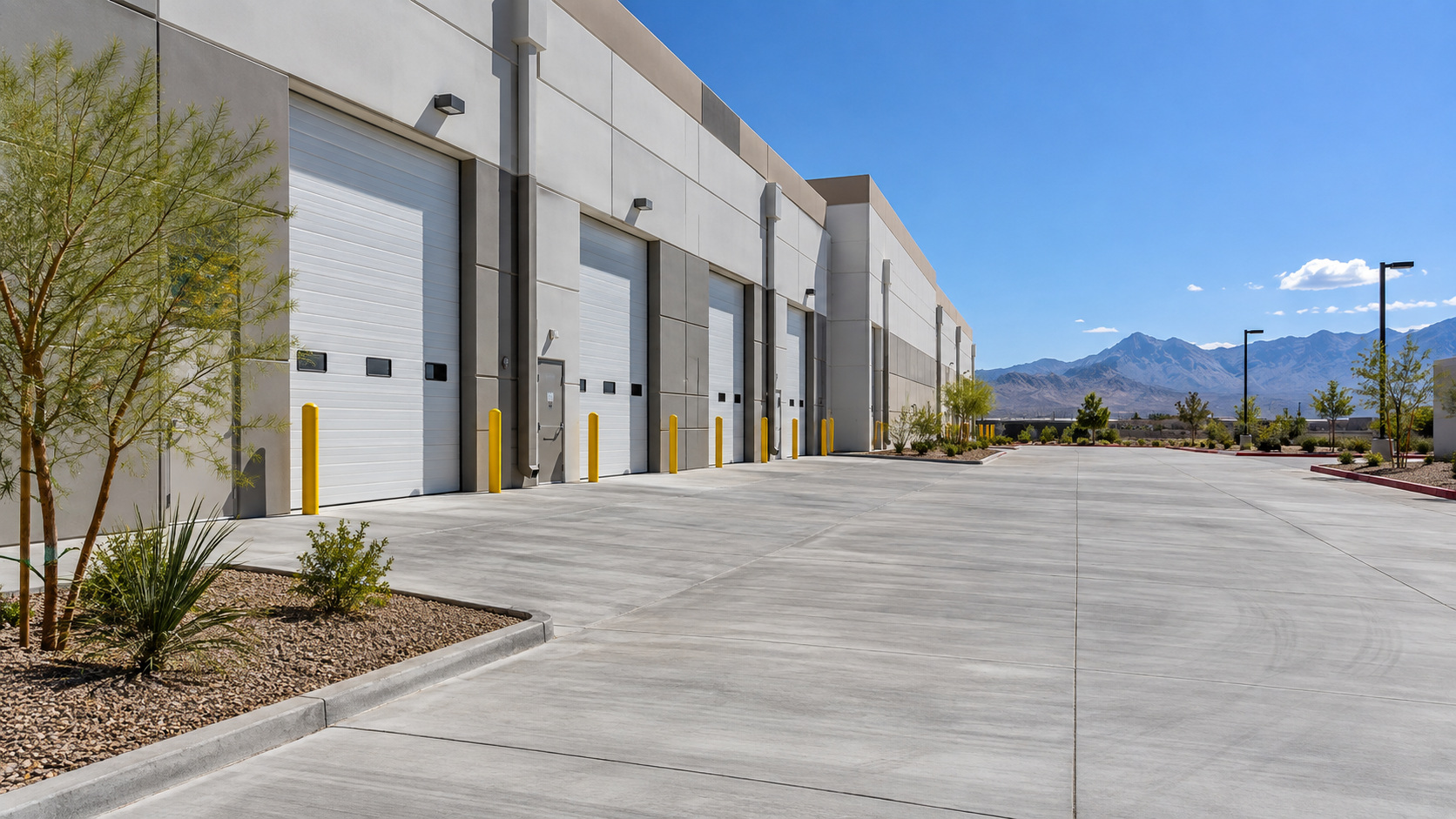
When we pour a slab or pad, we start with what it has to hold, not just the square footage. A small shed pad, an equipment base, a workshop slab, a trash enclosure pad and a slab for an addition all carry different loads and need different edges, anchors and thickness.
So the first thing we ask is the use, the size, the load, the access and what sits nearby. That tells us whether your project is simple exterior flatwork or part of a larger structural or permitted job.
We start with what the concrete will carry and how you use it every day.
We set excavation, compaction, elevations and drainage before anything is poured.
We pick a finish and a placement plan that fit your property and how we can reach the work.
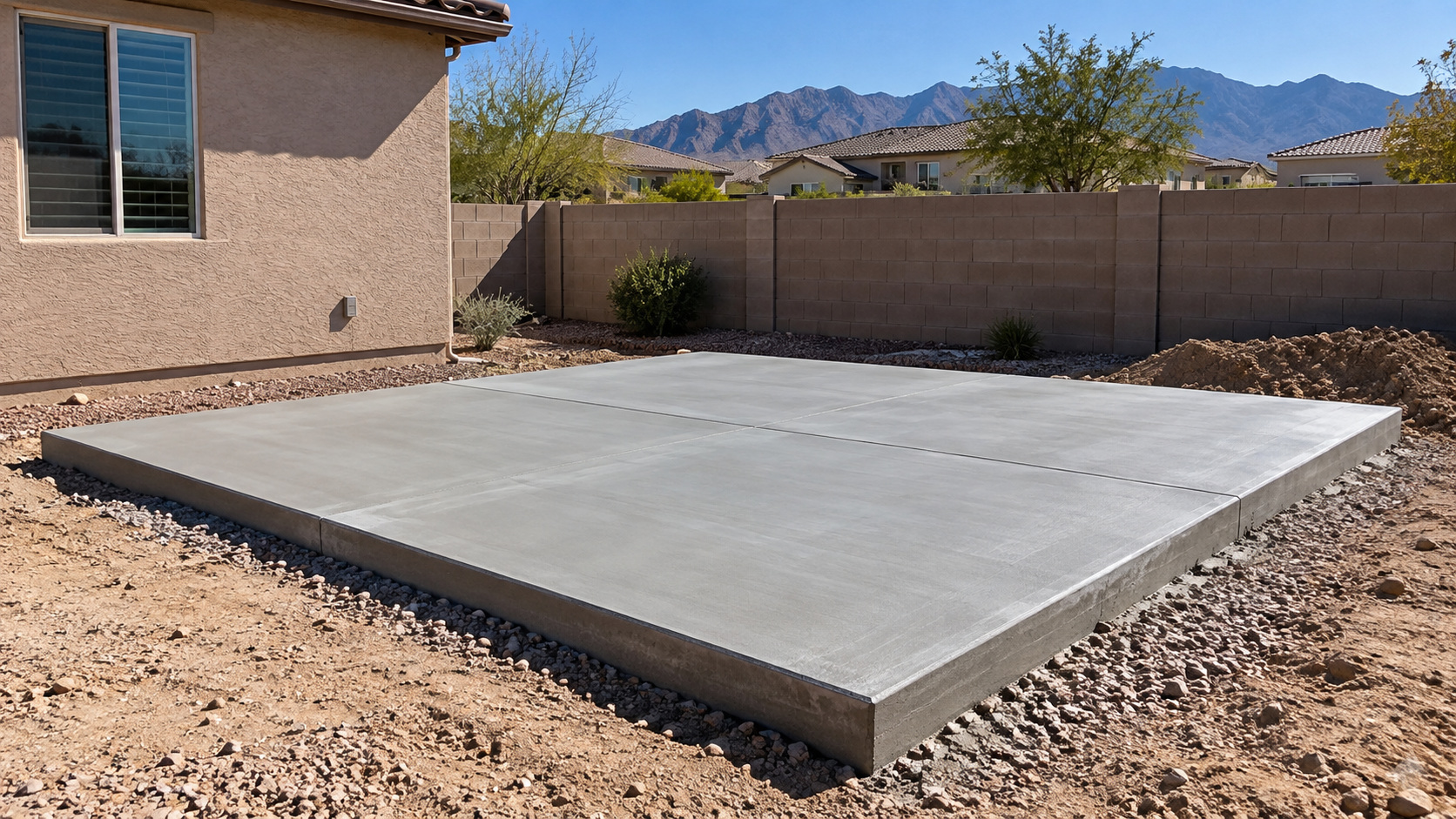
Level, Solid and Ready for the Load
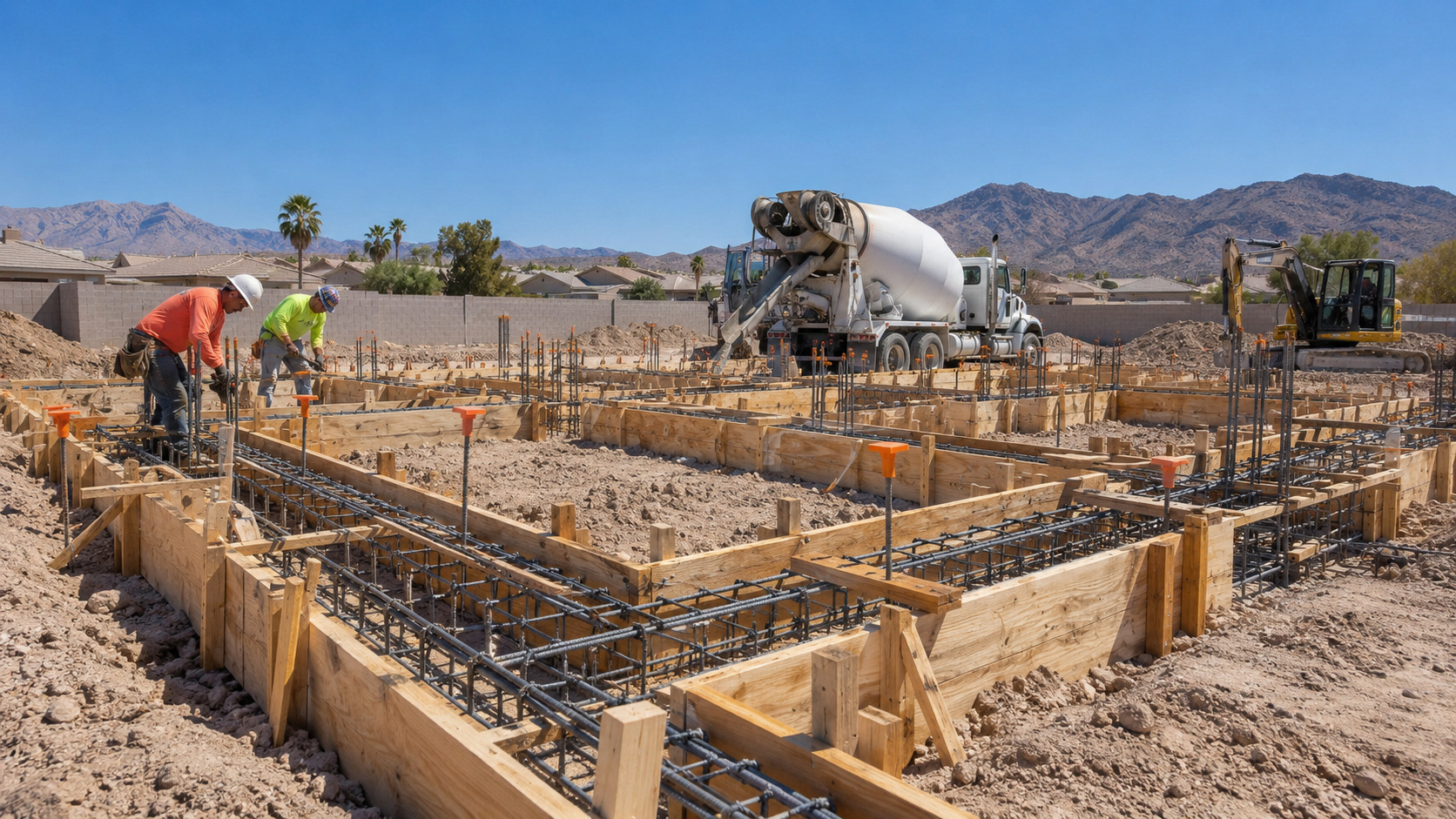
Base work matters even on a small slab. We set excavation depth, compaction, base material, reinforcement and joints for the use, and a slab that carries equipment or a structure is never treated like a decorative patio.
Forms and elevations set the finished shape. Near buildings we tie the pad into drainage and thresholds, and for utility or equipment pads we confirm clearances, sleeves, embeds and anchor spots before the pour.
What You Don't See Matters Most
The finish is the part you see. We put the same planning into what sits under it: the base, thickness, reinforcement, drainage, joints and the transitions to existing concrete.
Local Conditions
What Desert Heat and Your Lot Change
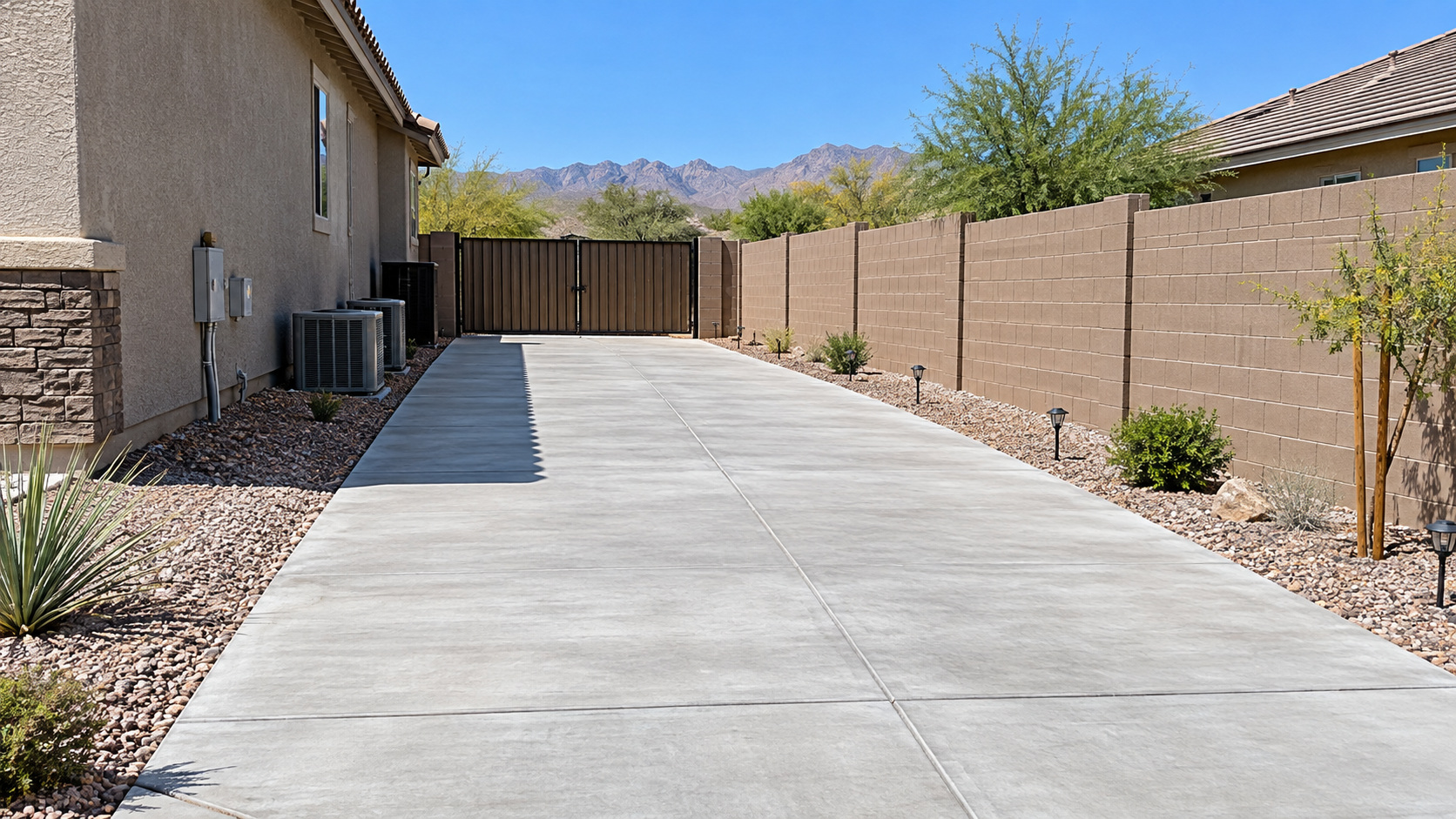
North Las Vegas lots often combine block walls, gravel landscaping, narrow side access and existing hardscape right next to where the pad goes. Access decides how we move material and how we handle demolition or digging.
Hot-weather placement still matters on a small slab. Small size does not remove the need for organized placing, finishing and curing when it is hot and dry.
Planning & Cost
What Your Price Depends On
Our typical range for a straightforward slab or pad is $6 to $10 per square foot, so a 400-square-foot pad comes to about $2,400 to $4,000. Size, thickness, reinforcement, excavation, base work, forming, access, finish, anchors or embeds and any demolition move it. Your final price comes from a written quote after we see the job.
Small pads can cost more per square foot because setup is spread over less area, and heavy-duty or structural slabs fall outside the plain range. We price those from the use and the design.
| Cost Driver | What Changes |
|---|---|
| Project size | Concrete volume, forming, finishing and getting set up on site. |
| Demolition | Cutting, breaking, loading and hauling old concrete, and protecting what stays. |
| Base and grading | Excavation, compaction, new base material and correcting elevations. |
| Thickness and reinforcement | Set by what the concrete has to carry. |
| Finish | Broom, color, stamp, borders, texture and sealer where you want them. |
| Access | Gate width, how far we carry concrete, and equipment limits. |
Estimate Preparation
What to Send Us for an Estimate
The more you tell us about the property and how you will use the concrete, the more useful our first conversation is. Send rough dimensions, a few photos, the address or ZIP code, whether old concrete has to come out, how you will use it, the finish you want, any access limits and your timing. For structural or commercial work, send plans or specifications if you have them.
That tells us early whether your job is simple flatwork or needs demolition, extra base work, special reinforcement, permits or a harder placement.